 listicle
Durable Flooring for Retail Spaces: 8 Options Compared
Choosing durable flooring for a retail space
A shop floor needs to suit the way the space operates: footfall, deliveries, displays, cleaning and the opening programme. Compare the complete installed system, including the base, joints and protective finish. A material name alone does not establish durability, slip resistance or suitability for water exposure.
Here are eight options to discuss with your designer and flooring contractor. These are comparison categories, rather than a claim that Puur supplies every material listed.
1. Puur PSR polished concrete overlay
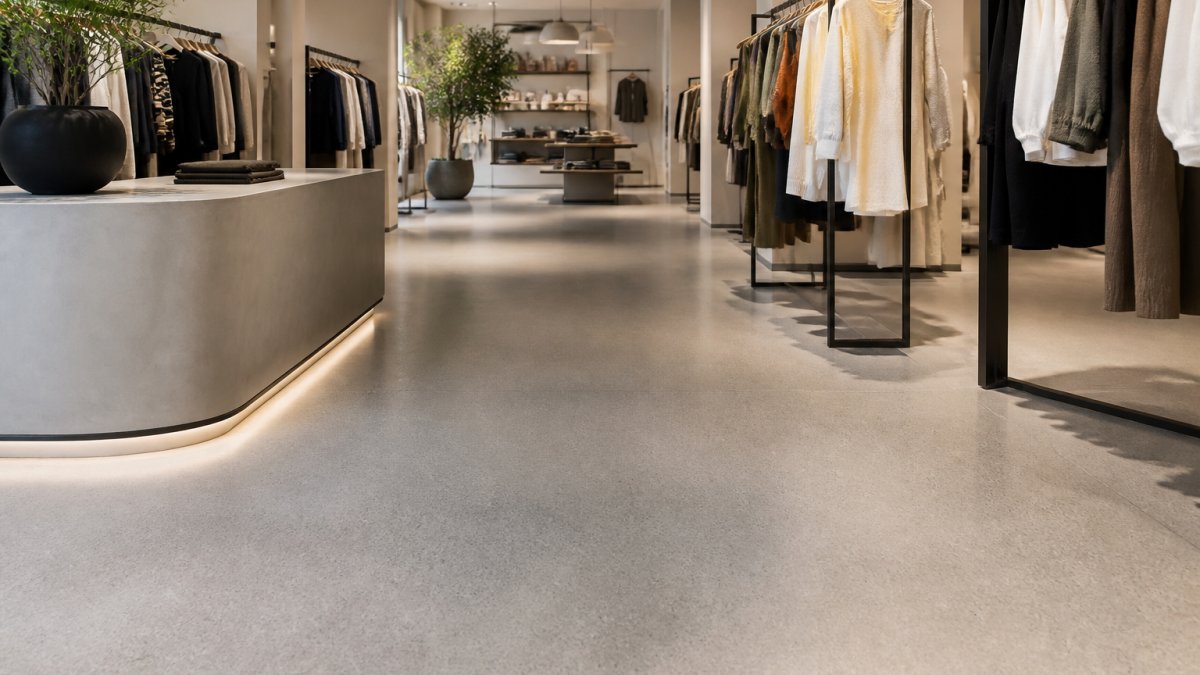
Puur PSR is a cementitious overlay that gives an interior the look of polished concrete without installing a new concrete slab. It can suit shops, showrooms and reception areas where a continuous appearance is part of the design.
Discuss the existing base, traffic, movement joints, thresholds and protection during fitting-out before specifying it. Natural variation is part of the finish; use a physical sample to agree colour and character. A colour reference does not promise an identical shade across every part of a hand-finished floor.
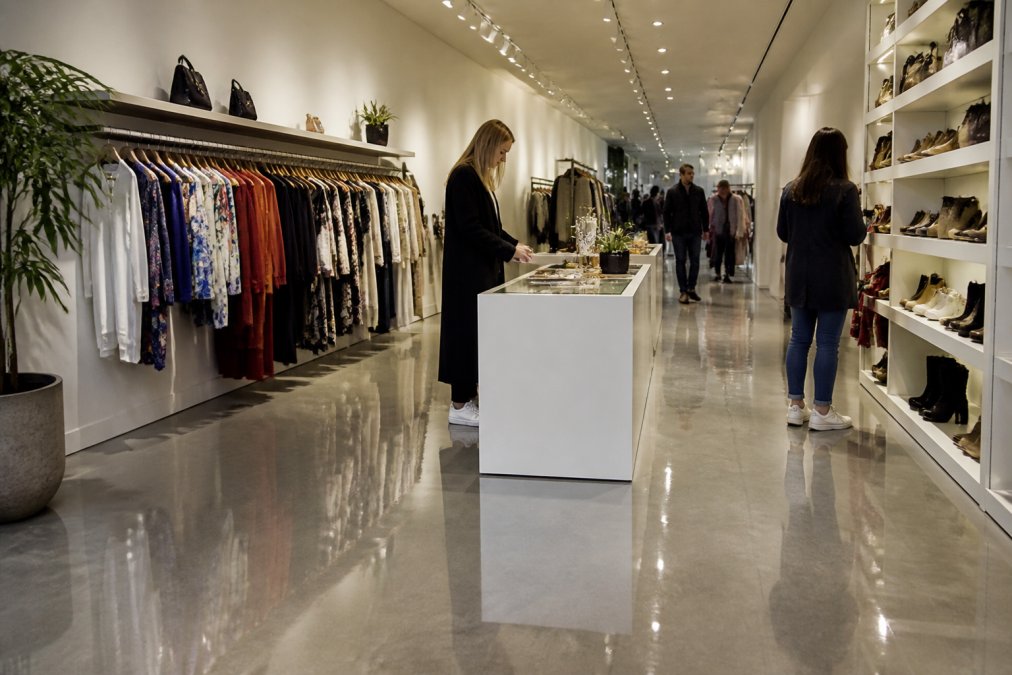
Illustrative image, not a documented Puur project.
A sealed surface still needs cleaning and care. Do not assume that a polished concrete finish is waterproof, antimicrobial, crack-proof or sound-absorbing. Suitability for heating or moisture exposure needs confirmation for the actual construction.
2. Epoxy resin flooring
Epoxy systems can provide a continuous finish for commercial interiors. Performance varies with formulation, thickness, preparation and topcoat. Ask for the proposed system’s data on expected traffic, cleaning chemicals, impact, sunlight and slip resistance.
Plan installation and curing around access needs. Neither a generic product category nor a glossy photograph establishes how a particular floor will perform.
3. Porcelain tile
Porcelain offers a wide range of appearances and product specifications. For retail use, check the selected tile’s suitability for expected traffic and contamination, together with the adhesive, grout and substrate design.
Joints remain part of the finished surface and need cleaning. Epoxy grout does not eliminate the need for hygiene routines. Keep spare tiles where practical, because later repairs may show differences in shade or batch.
4. Luxury vinyl tile
LVT can give a timber or stone appearance. Compare commercial-use specifications, wear layer, indentation resistance, cleaning instructions and requirements for heavy or wheeled displays.
Water resistance of the product is different from waterproofing the complete floor. Confirm suitability for entrances, spills and the chosen cleaning method. Costs and installation time depend on base preparation as well as the finish.
5. Sheet vinyl
Sheet vinyl reduces the number of joints compared with a tile layout. Welds, edges and details still need to be designed and installed correctly. Ask the supplier whether the complete system is suitable for the proposed use and water exposure.
6. Vinyl composition tile
VCT may be an option where the product specification and planned maintenance suit the premises. Establish the cleaning and surface-treatment requirements before comparing running costs. A finish that needs periodic treatment should be assessed alongside staffing and access arrangements.
7. Commercial laminate
Laminate can provide a timber appearance, but choose a product explicitly suitable for the retail application. An abrasion rating alone does not cover every aspect of commercial performance. Check moisture limits, joints, loading and warranty conditions.
8. Quarry tile
Quarry tiles can suit some robust commercial settings. Assess the actual surface, grout, cleaning regime and exposure conditions. A textured appearance does not by itself prove adequate slip resistance.
Cleanability is different from antimicrobial performance
A continuous finish can reduce the number of grout joints to clean. It does not stop dirt or microorganisms settling on the surface, and does not replace cleaning or disinfection where required.
If a project needs a specific antimicrobial property, obtain evidence for the exact product and intended application. Avoid describing ordinary resin or polished concrete as inherently antimicrobial, or promising reduced cleaning costs without evidence.
Maintenance to agree before handover
- Use the cleaning products, dilution and equipment approved for the installed finish.
- Remove abrasive dirt and manage entrance contamination with suitable matting.
- Deal promptly with spills and check how the finish responds to the substances used on site.
- Protect the floor from sharp display feet and equipment loads.
- Inspect wear and follow the supplier’s advice on resealing or other maintenance.
Do not apply a universal schedule for polishing, buffing, waxing or grout sealing. These tasks are system-specific; the wrong treatment can affect a protective finish. Cleaning frequency should follow actual use, contamination and the supplier’s instructions.
Make a like-for-like comparison
Ask each supplier to include base preparation, moisture checks, installation, joints, curing, protection and ongoing care in their proposal. Confirm any lifespan or warranty claim in writing rather than treating a generic number of years as a promise.
For a Puur PSR proposal, send us plans, photographs of the existing base and details of the shop’s use. We can discuss samples and whether the construction is suitable before agreeing the specification.
Discuss your retail floor with Puur
Frequently Asked Questions
What is the most durable flooring for a retail shop?
There is no single best material for every shop. Compare products against expected footfall, display loads, moisture exposure, cleaning and the construction beneath them. Puur PSR may suit a retail scheme seeking a polished concrete appearance, subject to assessment of the project.
How long should commercial retail flooring last?
Service life depends on the complete system, preparation, installation, traffic and maintenance. Ask for product-specific expectations and warranty terms. Generic lifespan figures are not a guarantee for your shop.
Are there antimicrobial flooring options for boutique retail shops?
Some specialist products may have tested antimicrobial properties, but resin or polished concrete should not be described as inherently antimicrobial. A continuous surface still needs cleaning. Ask for evidence for the exact system if an antimicrobial property is required.
What are the maintenance requirements for commercial retail flooring?
Follow the installed system’s care instructions for cleaning products, equipment and frequency. Remove abrasive dirt, manage entrance moisture and spills, and inspect the protective finish. Polishing, waxing, resealing and grout treatment depend on the product.